If you’ve been doing everything “right” — eating less, cutting carbs, pushing through — and still not feeling the way you want to feel, I want you to know something important.
It’s not your fault. And restriction is probably not the answer.
Food isn’t just fuel. It’s information. Every bite sends a message to your cells, shaping your blood sugar, hormones, inflammation, even your mood. When your body isn’t getting the right messages, everything feels harder than it should.
The math matters. But math is never the whole story.
Why “Eat Less, Move More” Stops Working
At some point, maybe in your 30s, maybe in your 50s, you notice something has shifted. The body that used to respond to a few weeks of clean eating…. just doesn’t anymore. And almost reflexively, we restrict more.
More restriction is often the exact wrong answer.
What your body is asking for isn’t less. It’s different. Different can create better signals. It can provide better nourishment. The right building blocks to do increasingly complex work as we age.
When you start understanding food as communication rather than calories, everything shifts.
Your Body Is Constantly Reading What You Eat
The moment food enters your mouth, your body starts reading it like a code.
Specialized receptors throughout your digestive tract analyze the chemical content of your meal, releasing hormones that signal your brain — are you satisfied? Still hungry? This gut-brain conversation happens every single time you eat, whether you’re aware of it or not.
At the cellular level, food molecules travel through your bloodstream and act like keys, binding to receptors on your cells and influencing which genes are active. This is nutrigenomics, and it means you can’t change the genes you were born with, but you absolutely can influence how they express themselves. Omega-3 fatty acids signal your body to reduce inflammation. Sulforaphane from broccoli activates genes that support detoxification.
Your cells are listening. The question is: what are your meals telling them?
Full Is Not the Same as Nourished
Have you ever really thought about the difference between being full and being nourished? They sound like the same thing. They are absolutely not.
You finish a meal. You’re not hungry. But something still feels off, and an hour later you’re back in the kitchen, not because you need more food, but because your body didn’t get what it was actually looking for.
You can be completely full, physically and calorically, and still be undernourished. A meal high in refined carbohydrates fills your stomach while leaving your cells starved for the protein, healthy fats, vitamins, and minerals they need to function.
Your body knows the difference between being fed and being nourished. And it will keep asking, through cravings, fatigue, and that persistent “something’s off” feeling, until it gets what it actually needs.
The question isn’t just how much. It’s what.
The Insulin Story Nobody Told You
This is where I want you to really lean in, because understanding this changes how you see everything.
When you eat carbohydrates, your pancreas releases insulin. Think of insulin as a key, unlocking receptors on your cells so glucose can enter and be converted to energy. Beautiful system. Works perfectly, until it doesn’t.
Over time, especially as we age, those locks start to get rusty. The keys still work, but it takes more and more of them to open the same doors. Your pancreas compensates by producing more insulin. You feel fine. Traditional labs look normal. But quietly, your metabolism is becoming less efficient.
Now add hormonal changes. Estrogen declines in perimenopause and menopause directly impairs insulin sensitivity. Declining testosterone does the same. Layer in chronic stress, disrupted sleep, and years of blood sugar fluctuations, and you have the perfect storm: a body working significantly harder to do what used to be effortless.
This is why the body you had at 25 responds differently than the one you’re in now. It’s not a personal failing. It’s biology. And when you understand it, you can actually do something about it.
The most powerful way to improve insulin sensitivity is to require your body to produce less insulin in the first place. You do that by slowing how fast carbohydrates hit your bloodstream. Fiber slows absorption. Protein and fat slow it further. And the order in which you eat your food matters more than most people ever consider.
Eating protein and vegetables before carbohydrates dramatically blunts your post-meal glucose spike. Less spike means less insulin required. Less insulin over time means more sensitive receptors. More sensitive receptors means a body that works the way it’s designed to.
Two Small Habits That Create Real Change
I want to spend a moment on this, because I think it might be the most practically useful thing in this entire post.
One of the tools we use in our practice is continuous glucose monitoring. It lets us watch in real time how your blood sugar responds to what you eat and what you do. And two things consistently create the most powerful “I never knew that” moments.
The first is eating order. Someone eats chicken, broccoli, and rice starting with the rice. We watch the glucose curve spike on the screen. Then they eat the exact same meal, same portions, carbohydrates last. The curve is measurably, visibly different. Nothing on the plate changed except the sequence.
The second is movement after eating. Not necessarily a workout. Doesn’t even have to be a walk if that feels like one more thing to fit in. Just moving. Clearing the table. Doing the dishes. A few minutes of anything that gets your blood pumping. Here’s the science in plain terms: muscle is a sugar sponge. When you move after a meal, blood gets pumped into your muscles, and glucose goes with it, drawn directly out of the bloodstream without requiring additional insulin. The more intensely you move, the shorter the duration needs to be to see a meaningful effect. Two minutes of something vigorous works. Five minutes of lighter movement works. No change of clothes required.
What makes these two habits so powerful is that they don’t require doing “all the things.” So many people feel completely overwhelmed with all the changes they think they should be making. Instead, pick one or two objective, immediately actionable changes.Seeing how small changes actually affect your body — is the difference between feeling stuck and feeling like this is actually doable. Small changes create new habits that change momentum.
Your Gut Bacteria Are Running More of the Show Than You Think
Here’s something worth sitting with: the bacteria living in your gut outnumber your own human cells. And they are not passive passengers. They are actively running systems you depend on every single day.
Fiber is their primary fuel. When you feed them well, they produce short-chain fatty acids that protect your gut lining, regulate your immune system, and reduce inflammation throughout your body. When fiber is scarce, microbial diversity drops, gut integrity suffers, and the downstream effects show up everywhere from digestion to mood to metabolic function.
Here is a bit of body trivia that is worth paying attention to: while fiber feeds the beneficial bacteria that support your health, sugar feeds a very different crowd. It fuels the opportunistic, harmful bacteria. What you eat is not just feeding you. It is actively cultivating one microbial community or another.
The most important nutritional shift is often not what you’re taking away. It’s what you’re adding in. More fiber, more variety, more of the foods that build the ecosystem your health depends on.
What you’re missing is usually more important than what you need to cut out. And it’s almost always more sustainable.
Where to Start
Your body doesn’t need a perfect diet. It needs the right signals, consistently delivered.
A few shifts that create outsized impact:
Eat protein and vegetables first, carbohydrates last. At dinner, hold off on the bread until after you’ve eaten your protein and vegetables. Same meal. Different order. Measurably different metabolic response.
Move after you eat. You don’t need a walk or workout clothes. Just move for a few minutes. Do the dishes, tidy the kitchen, go up and down the stairs. Pump blood into your muscles and glucose goes with it. The more intensely you move, the shorter it needs to be. Muscle is a sugar sponge, and this is one of the most underused tools in metabolic health.
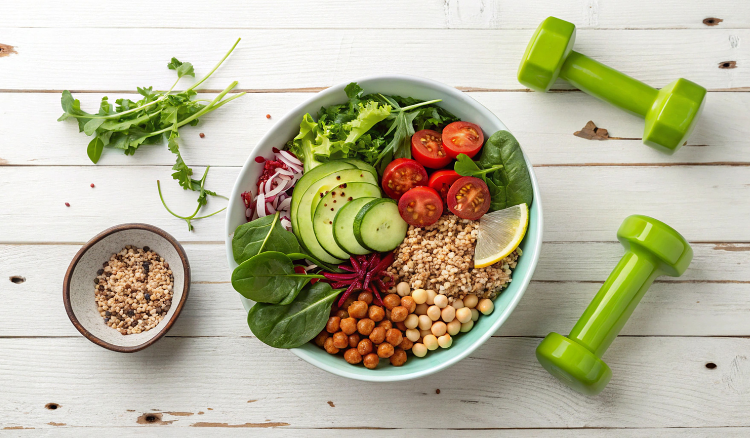
Build your plate with intention. Half non-starchy vegetables, a quarter quality protein, a quarter complex carbohydrates, healthy fat throughout. A framework, not a rule.
Ask what you’re missing, not just what to cut. Cravings, fatigue, and brain fog are often your body signaling a gap, not a failure of willpower. Adding what’s missing often quiets those signals more effectively than restricting anything.
Eat at consistent times. Your insulin sensitivity follows a daily rhythm. Work with it.
These are not dramatic changes. Done consistently, they add up to a fundamentally different conversation between you and your biology.
Your Body Has Been Waiting for This
Right now, without any effort on your part, your body is working on your behalf. Your mitochondria are converting food into energy. Your gut bacteria are protecting your immune system. Your hormones are coordinating thousands of functions simultaneously.
Your body is not your adversary. It is your most faithful partner.
Understanding what it needs to be whole, strong, healthy, and to truly thrive — that understanding changes everything. The food industry is multi-billion dollar industry designed to sell. There’s SO MUCH NOISE. Let’s drown out the noise. Every meal is a conversation with your biology. Three times a day. Every day. For the rest of your life.
When you show up to that conversation with intention, things change. Energy stabilizes. Cravings quiet. Sleep improves. The body that felt like it was working against you starts working with you again.
Because it always was. It just needed the right signals.
At YOUR.Life Functional Medicine, this is the work we do — helping you understand your body’s unique signals through advanced diagnostics, personalized nutrition, and real ongoing support. If you’re curious about what your labs might reveal, or you’d simply like to understand your biology a little better, we’d love to start with a conversation. Learn more at yourlifenewtown.com.